Have an Ice Time (Transfer of Energy)

Our science projects this year have all fallen under the broad umbrella of “Energy”. This art project seemed to fit the bill.

Materials:
Food coloring
Cookie sheet or tray
Interestingly shaped household containers*:
mini loaf pans
paper cups
rubber glove
balloon
flexible molds
muffin tins

* Stay away from glass containers. You may need to dip them in warm water to loosen the ice, and now is not the time for a Lesson in Thermal Shock. Unless you want it to be, in which case, wear goggles and maybe some gloves… I’d probably skip it this time.

Method:
1. Place a drop of food coloring in each container, and then add water.
2. Freeze.
3. Release your frozen puckies onto a large cookie sheet or tray – the kind with a lip (this is important)  If the frozen puckies perversely prefer the security of their containers to, say, the destructive grasp of your little angel, just dip their container in warm water for a few moments and they’ll slide right out.
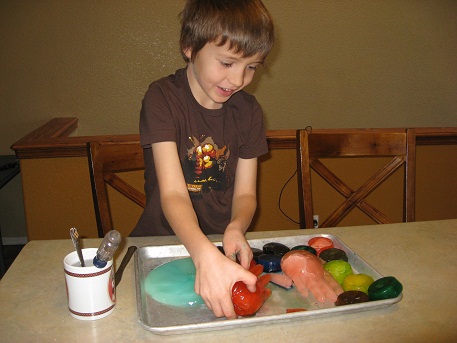
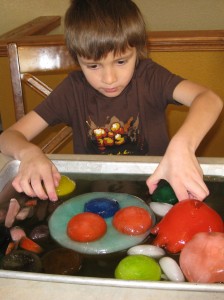
4. Give child the frozen puckies on tray.
5. Give your child things to shape the ice with.*
*Safety note: YOU know your child. If your child is accident prone, now is not the time to give him a screwdriver, hammer, and retire to the other room to catch up on Glee. Metal things like spoons and some hot water, plus supervision, is appropriate. Energetic stabbing motions with forks should be discouraged.

Possible Lessons for the Enterprising Parent (i.e. The Parent who Drives their Children Nuts):
1) What happens to the volume of water when it freezes? Mark the level of the water in your container(s) before freezing.

2) Transfer of Energy: Freezing involves a loss of energy. When the water freezes, where does the energy go? When it melts, where does the energy come from? Why does a spoon that’s been sitting in hot water melt the ice more quickly than the spoon sitting in ice water?
3) Which freezes faster? I know many of us have heard that hot water will freeze more quickly than cold. Formulate a hypothesis and test it! (hint: this is a good practice science fair project for the young ‘uns).
4) Try making a couple puckies with sugar water*. Does it freeze differently? Melt differently? Why?
*Maybe don’t let them play with the sugary puckies. Or maybe do – I don’t have to clean up after your children.

Visiting from Skip to my Lou? Be sure to let me know what you think!

Categories: Science | Tags: , , , | Leave a comment

A Few Christmas Vacation Science Projects


Looking for something fun to do with the kids over Christmas break? Here are a few science projects I’ve found on the web.

This has two Christmas suggestions.

  1. Identifying mystery powders, includes a decision chart and backstory (I’m guessing Mrs. Claus isn’t very good at food storage safety). Requires basic household supplies: baking powder, baking soda, flour, powdered sugar, baby powder, corn starch, vinegar, and iodine.
  2. Chromatography Christmas decorations (requires coffee filters and non-permament dyes, like those in an overhead marker. I’ve even seen it done with M&M’s)

2.  Christmas Ornament (Crystals)

A holiday variation on your typical crystal garden experiment.

3. Examining Snowflakes (Crystals)

This one requires children to collect snow flakes as they fall, inspect them, and record their observations. Not really an option here on the border, but maybe you’ll have a White Christmas at your house!

4. Old Fashioned Sponge Candy (Acids and Bases)

The combination of vinegar (acid) and baking soda (base) makes a foamy candy.

5. Interplanetary Christmas

What would Christmas be like on the other planets in our solar system?

6. And don’t forget to let the kids help you with the baking! Cooking is full of math and chemistry, and it’s yummy, besides.

Categories: Cooking, Crafts, Kids, Science | Tags: , | Leave a comment

Crochet a Border on a Store-Bought Lap Blanket

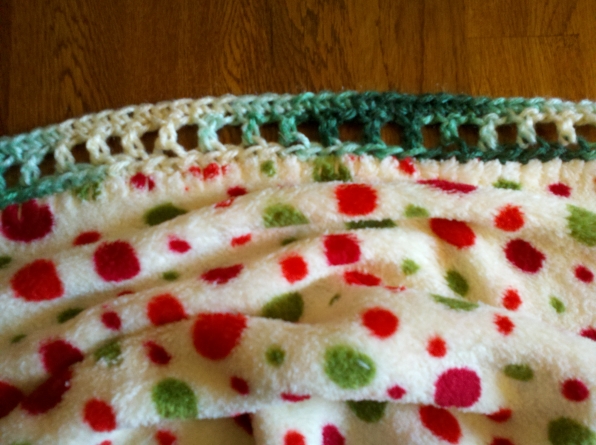
Woohoo – fast and easy Homemade Christmas project. The store-bought throws that are $5-$10 at every store during the holidays often have a whipstitched edge, which works perfectly as a base row for a personalized crochet border!

Talk about an easy AND satisfying first crochet project – lots more useful than making crocheted washcloths and potholders by the dozen.

This border was made with three stitches, the Single Crochet Stitch, and Double Crochet Stitch alternated with a Chain Stitch. Older children will easily be able to master these stitches, and may have some fun creating their own. Here are two video tutorials I found useful. (Yes, you can teach yourself to crochet via YouTube. I did!)

Single Crochet Tutorial on YouTube
Double Crochet Tutorial on YouTube
Chain Stitch Crochet Tutorial on YouTube

This one is headed to a local nursing home, along with a new pair of slippers.

Categories: Crafts | Tags: , | Leave a comment

Santa Loves Doggies…

… And so does Boo! He’s making his favorite four-legged friends a special present this year.

Dog Biscuits

2-3/4 cups whole wheat flour
1 cup oatmeal flour (or oatmeal)
3/4 cup powdered milk
1 cup finely chopped carrot
1-1/2 teaspoons cinnamon
3 tablespoon wheat germ
1/2 cup peanut butter
3 T oil
1 T molasses
2 eggs
1/2 cup ice water

Preheat oven to 350 degrees F (175 degrees C).

  1. In a medium bowl, stir together the flours, powdered milk, cinnamon, and wheat germ.
  2. Blend the remaining ingredients in a blender till smooth.
  3. Combine wet and dry ingredients. Dough should be just wet enough to stick together; add a tablespoon of flour or water if needed to adjust consistency.
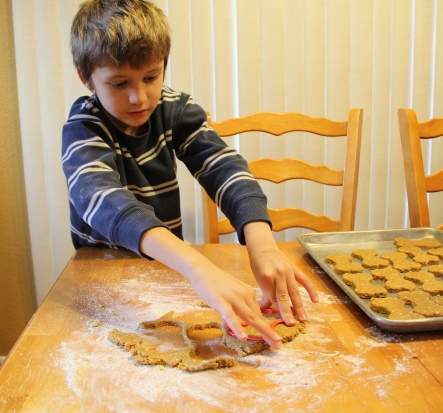
  4. On a lightly floured surface, roll the dough out to 1/2 inch thickness and cut with cookie cutters. Place biscuits 1 inch apart onto an ungreased baking sheet.
  5. Bake for 25 to 30 minutes in the preheated oven, until firm. Cool before serving. For a crisper biscuit, after baking, dry the biscuits in a warm oven (200) and turn occasionally till they are as dry as desired.

Modify the ingredients list as needed for special dietary concerns.

Categories: Crafts, Pets | Tags: , | Leave a comment

No-Bake Chocolate Oatmeal Cookies

  • 1 cube of butter
  • 1/2 cup milk
  • 2 cups sugar
  • 4-4.5 cups oatmeal
  • 3 tablespoons cocoa
  • Heat the first 3 ingredients in a 3 quart saucepan over medium heat, stirring frequently.  Bring to a hard boil and boil for one minute. Remove from heat.

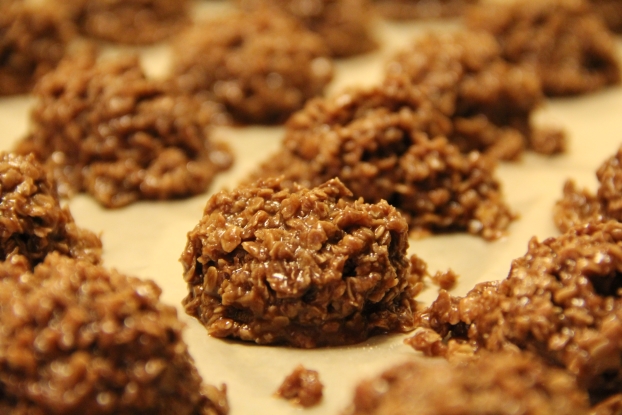
    Stir in oats and cocoa. Quickly spoon  in heaping teaspoons onto waxed paper. Eat when cool!

    Categories: Cooking | Tags: | Leave a comment

    Train and Truck Set

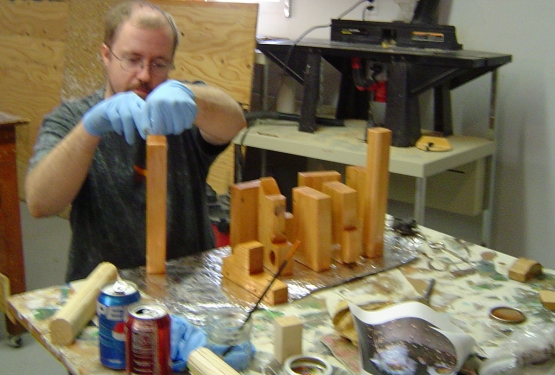
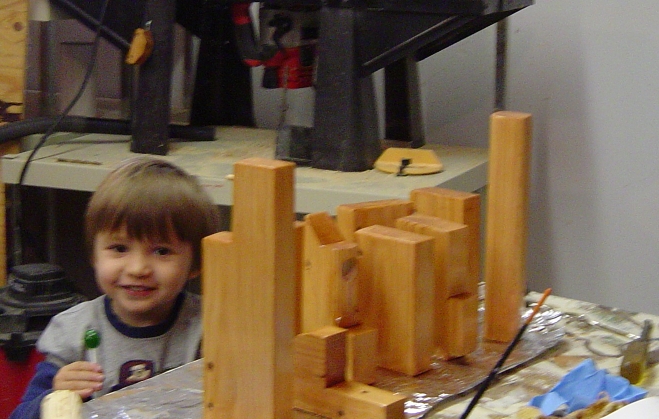
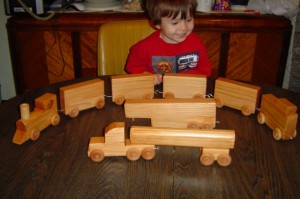
    The finished set has:

    • a train engine
    • Caboose for the train, or a camper for the pickup
    • A truck (can be a semi or a pickup)
    • One semi trailer
    • One tanker
    • 4 trailers/cars.

    The truck can be used as a pickup (using the caboose as a camper), or as a semi-truck. We had to make two different trailers because both of Boo’s grandpas are truckers, and one was currently hauling tankers.


    Visiting from Skip to my Lou?  Be sure to tell us what you think!

    <a href=”http://www.skiptomylou.org/” ><img src=”http://www.skiptomylou.org/wp-content/uploads/2010/01/button2.jpg” /></a><br />

    Categories: Crafts, Kids | Leave a comment

    Yet Another Rant Against Sexist Advertising

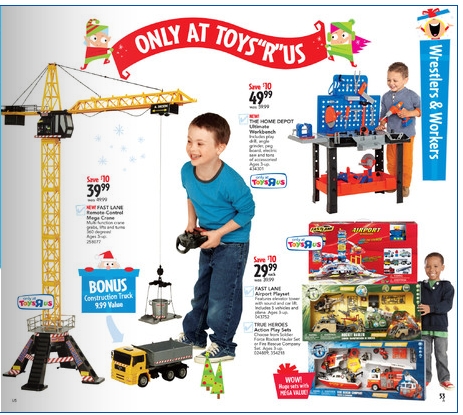
    Page from 2010 ToysRUs Catalog

    Page from 2010 ToysRUs Catalog

    This blog was published yesterday (on November 19, 2010) and is already making its rounds.

    An excerpt:

    “As we enter the holiday season, the inevitable toy catalogs begin arriving on our doormats. Most of the celebrations this time of year involve some form of gift giving, and if you have kiddos, that means t-o-y-s. Toys, toys, and more toys!”

    This (advertising toys in a gender biased manner) is a big problem. Somewhere around 5th-7th grade girls are losing their excitement for math/science. We aren’t getting enough girls in the STEM (Science, Technology, Engineering, Math) fields. Why is that happening? These same girls loved science and were competent in math in 4th-5th grade.

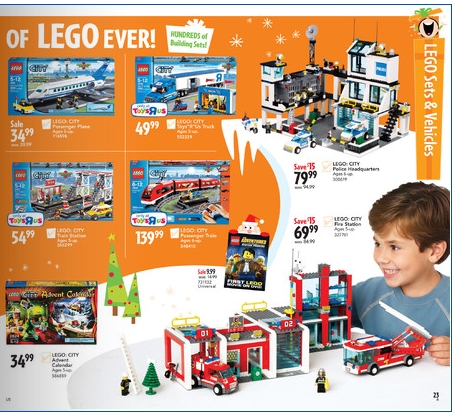
    When was the last time you saw a picture of a girl on a Hot Wheels package? Hot Wheels are a good introduction to basic physics. There are girls on the Duplo packages – the pink/aqua/violet jumbo building blocks. Only boys are on the standard (Lego) sized building blocks.

    One of the things that gets kids to stick with Math and Science is the sense that they have acquired a certain degree of competence in it. Competence comes with practice; it’s not necessarily innate. Practice through play is one of the most fun and efficient ways to learn. Toys that are marketed primarily to girls are less likely to encourage these competencies than are those marketed primarily to boys.

    Page from 2010 ToysRUs Catalog

    Page from 2010 ToysRUs Catalog

    Advertising works, that’s why money gets spent on it. We need to question a practice that implies a good girl needs to pick quiet activities, obsess over appearance, and choose pink toys. There’s not anything wrong with a girl (or boy) choosing activities like these of their own volition, but it doesn’t seem to be doing girls (as a whole, and I’m basing this solely on data concerning girls/women in STEM fields) a lot of good to subject them and their parents to powerful, effective, and expensive advertising in order to influence their behaviors in this way.

    This, of course, is just the tip of the iceberg when we look at why we have gender disparity in the STEM fields (read here) but by taking a long, hard look at how advertising is effecting the way we raise our sons and daughters, we can impact this one variable today, this holiday season, and in the years to come.

    Categories: Kids, Science | Tags: , , , , , , , | Leave a comment

    Energy, and States of Matter

    This experiment/lesson has been designed for a class of second graders who are learning about the States of Matter. It’s pretty easy to throw in a introduction to Energy.

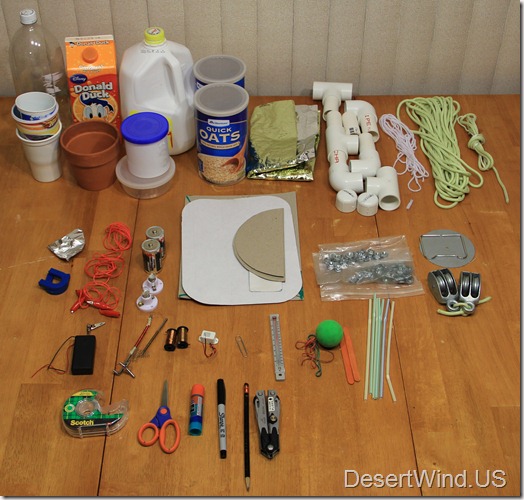
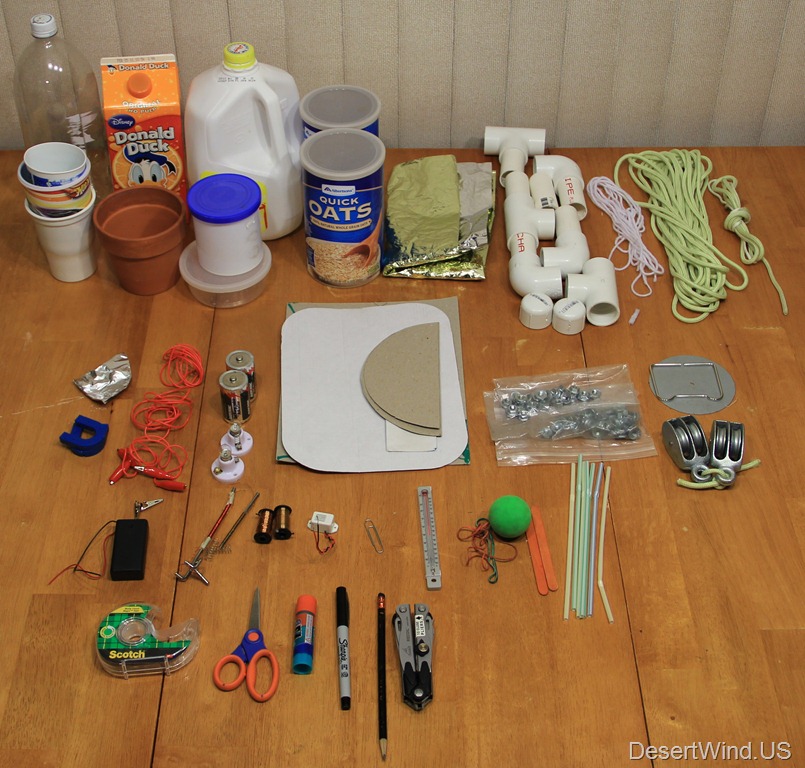
    Here’s everything you’ll need (except the students – you’ll have to find them yourself):
    Supplies

    PART 1: Teacher Prep
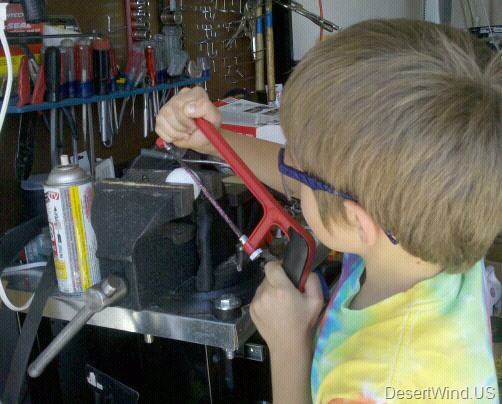
    The teacher, or a parent volunteer (like moi) needs to prepare these stoves ahead of time. It is also an appropriate project for an older kid, who won’t fuss too much if she gets a cut. But definitely not in a school setting (liability!) without some gloves, goggles, etc.

    I don’t really think an adult needs to wear any safety equipment unless 1) you are likely to sue me if you get a booboo, 2) you are accident prone. My husband is quite adamant that he’s not accident prone but if you’re like him (not accident prone, and lots of bumps, cuts and bruises to prove it) maybe you should wear gloves, too.

    You’ll need some aluminum cans, but don’t use your beer cans. I can’t stress this enough.  Students have big mouths.

    Other stove-making supplies:

    • Aluminum Cans (yeah, I already said that)
    • Old utility scissors (don’t use the hair-cutting scissors or the sewing scissors)
    • Utility knife
    • Sharpie (optional)

    You’ll need to cut up the cans. How you do it is up to you – but you need to get the top off and discard (recycle) and get air vents into the stove. Teaching opportunity: Candles burn, Burning=Oxidation, and what does OXidation require? Ding ding ding – that’s right! Oxygen. So give the candle some air. Here’s some ideas. I folded the bottoms up to be slightly less of a cut-hazard, but honestly, there are still sharp edges all over so the best bet is to just BE CAREFUL.


    PART 2: The Energy and Matter
    This is where the kids get involved.
    I do the kids-in-motion demo, here.

    Pick one lucky student to be the sun (light source/energy source). Give him a white, fluffy blanket to hold. He’ll shine varying amounts of light on the kids.

    The other kids will be matter in a form familiar to them – water. Tell them to line up in neat rows. Tell them to keep an eye on the sun.  Remind them that the sun is the source of energy.

    When the sun is hiding – the kids don’t have energy. Ask what phase of matter they are (Solid). Ask what solid water is called (ice, snow, hail…)

    When the sun starts coming out from behind the clouds, the water will absorb some energy. They should start moving.

    When the sun is completely out, the water will absorb even more energy. This is called, class, “evaporation”, and results in water vapor, a form of gas! Some of the students will gain so much energy they will escape from their nice neat rows. Use this to your advantage (after you hide the sun behind a cloud and freeze the molecules). Explain that gas escapes easily if not well-contained.

    Repeat as necessary. You can do a lot with this. Ditch the sun, and ask the kids to demonstrate other liquids (milk, lava), other solids (ice cream, rock), etc.

    PART 3: The Experiment

    This is where we put kids and fire in the same room.

    Obligatory Safety Comments:

    • Students with long hair should keep it pulled back. Parents don’t like Tiki-Torch Daughters.
    • Consider passing goggles out to all of the kids (even those who wear glasses). It’s good practice for college (and all of your students are going to college. Yes, they are.) and there is always the possibility of hot wax flying through the air at some point and finding an eyeball. Not a probability, but surely a possibility. Parents don’t like buying eye patches for their daughters. It’s so hard to match them to your prom dress.
    • Keep a glass of water nearby. Never put a lit candle near flammable material. Don’t leave the lighter/matches in reach of science-crazed Second Graders. Just remember fire safety. This goes back to the Tiki-Torch Daughter comment.

    The kids now have done enough background “research” to formulate a hypothesis. Explain that a hypothesis is a prediction based on observation, research, etc.

    Depending on the age group, they may be able to formulate their own hypothesis on the relationship between energy and the phases of matter, but you might want to give them two choices. They need to decide if matter whill change from solid ->liquid->gas as a result of energy gain, or energy loss. Have them vote on one choice, and test the hypothesis that most of the students have voted on.

    Group 1

    This group will test the hypothesis directly. They use a light source (candle) to change the phase of water from solid, to liquid, to gas.


    I used two jelly-jars here to show that we really are seeing water vapor.

    Warning: Don’t just leave the jelly-jar here like I did. It will fall, and then the stove will tip, and then the candle will flip, and then the hot wax will spill. Ask how I know.

    This one is neat  because you can actually see the opposite of evaporation taking place – condensation. Can we say, “oooh!”. Yup.

    Group 2

    This section could use a bit more work. If anyone would like to re-do my worksheets let me know. The idea is simply to split the class up and fulfill a few more Standards and Benchmarks by having the students use a thermometer, record data, analyze data, etc.

    They are “proving” that light = temperature. See, not a strong lesson, but it does allow them to monitor the temperature from ice to very hot water.

    The kids need to operate a timer and record the temperature of the water every 2 minutes, as it is changing phases (It stabilizes in less than 10 minutes). This gives them a chart of  time vs. temperature, and there is a lot of good stuff you can do with that.

    Audience: Second Grade Public School Class, Homeschoolers
    Audience Size: 1-24 students

    Time Spent on Lesson: 35 minutes (Part 3, Group 2 wasn’t taught in this go-round).
    Standards Addresssed:
    St 1
    B1: PO1, PO2, PO4
    B2: PO1, PO2
    B3: PO1
    St 2I
    B1: PO1, PO2
    B2: PO1, PO2, PO3,
    St 3
    B1: PO3, PO4

    Contact me via comments for the actual lesson plans – I have 2 student worksheets (Group one and Group two), 2 teacher worksheets (Group one and group two), and speaker/introductory notes. As of 11-2010 I can say that I check my email daily and would likely get back to you w/in 24 hours.

    Categories: Crafts, Kids, Science | Tags: , , , , | Leave a comment

    Writing for Diapers

    CDW Campaign 3I’ve sporadically posted on my own blog because I decided to do some writing for Kelly’s Closet’s blog, The Cloth Diaper Whisper.

    When I began my cloth diapering journey, I was not set on any one distributor. I am loyal to Green Mountain for their prefolds, and for the owner’s commitment to only sell natural fibers for against-the-bum use. She’s been around for years and continues to get top scores for customer service as well as for product quality.

    That said, I wanted to try out the stay-dry technologies, and those are NOT natural fibers. Okay, they once were (if you go back and look at the origins of polyester <-plastics <- petroleum <-swamp plants and ocean critters) but saying they’re natural is like saying McDonalds “ice cream” is natural. So I had to find another retailer.

    I looked at several different stores, and they all had great incentives and advantages. I picked Kelly’s Closet out of the bunch because I wanted to shop primarily from one retailer, and I found that I was more likely to find what I wanted there, than from any other retailer.

    How does that lead to “writing for diapers”? The Cloth Diaper Whisperer regularly asks for reader submissions. All you need to do is contact them, and they’ll send you a list of topics. You’re rewarded with Diaper Dollars, which can be traded in for a gift certificate, and hence, more diapers.

    The other reason I haven’t been writing more of these types of posts for our site is that our blog was never intended to be solely about cloth diapers.  More posts will follow, but hopefully we can shift the focus a bit more towards techie/geek topics in the coming weeks.

    Categories: Cloth Diapering, Kids | Leave a comment

    Attack of the Great White Crusty

    I recently guest-wrote a blog for Kelly’s Closet Blog, The Cloth Diaper Whisperer. Attack of the Great White Crusty gives advice on laundry routine in ultra-hard water regions (600ppm+).

    Categories: Cloth Diapering | Tags: , , , | Leave a comment